
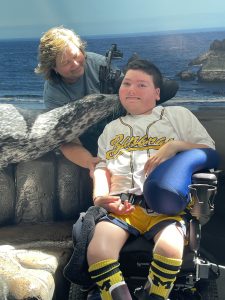
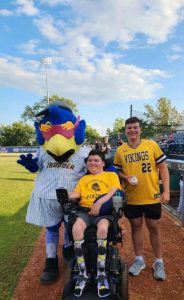

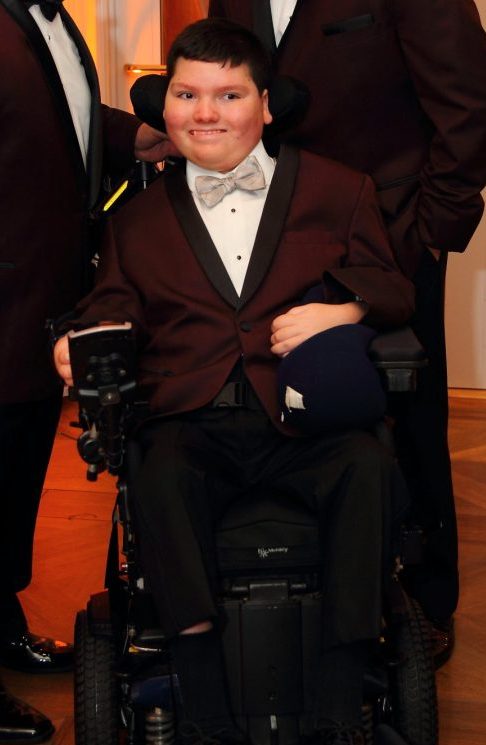
Meet Ray
I gave birth to Ray, our second child, in October 2008. When Ray was 4 months of age, we went to our pediatrician for his well checkup. We knew Ray seemed floppy, especially compared to our older son. We assumed he would catch up. At that visit, our pediatrician expressed concern with Ray’s low muscle tone and recommended we see a neurologist.
Shortly thereafter, we went to see Dr. Richard Finkel, a neurologist (and long-time SMA researcher and public speaker) at Children’s Hospital of Philadelphia (CHOP). We will never forget March 30, 2009 when we received a tentative diagnosis of Spinal Muscular Atrophy Type 1. Dr. Finkel said, “I hope it is not SMA, but it seems highly likely.” Matt Googled it while we were in the office and he found out SMA is an incurable, terminal disease.
Moreover, SMA is the #1 genetic killer of infants. The average life expectancy of an infant diagnosed with SMA is 2 years of age. We were crushed. I remember Matt holding me while I cried hysterically in the parking garage.
We love our boys more than anything. As we digested Ray’s diagnosis over the next few months, we vowed to do everything possible for him – to give him the best chance and to make sure he enjoyed life no matter what the length of time he has.
Ray faces a lot of challenges, but his attitude is amazing. He goes to a lot of medical appointments and therapies, but he does not complain. Our home is filled with medical equipment, but it does not faze him. Ray never says that he cannot stand or walk. In fact, he says he WILL stand and walk someday. We love his attitude and do not tell him he will not be able to walk. No one knows what the future holds.
In fact, there are several SMA drugs in clinical trials. Three months after the first FDA approved became available in December 2016, Ray started to receive it. The drug, SPINRAZA, is injected into the spine. At first, when Ray received this $125,000 drug, he said he felt stronger. Over time, he did not feel that way. So, after receiving 26 spinal injections, in 2024, we switched to another medicine, Evrysdi. After being on Evrysdi for a few years, we can say it is not everything we had hoped it would be. We are thankful that Ray has not lost any strength but he has not had any noticeable, sustained improvement either. In Fall 2025, Ray started to receive monthly infusions of a myostatin inhibitor drug named Apitegromab. It has not been FDA approved yet. (Sidenote: In 2010, Ray’s neurologist at Johns Hopkins shared his belief that SMA would require a combination of medicines to affect significant change.) So far, we have not seen any noticeable changes; we remain hopeful that researchers are getting closer to figuring it out.
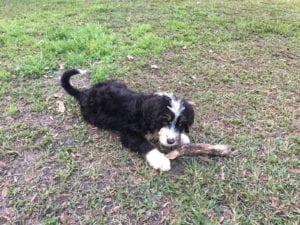
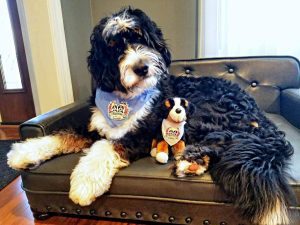
In other news, Ray and his service dog, Bacchus, are inseparable. Bacchus is a bernedoodle (Mix of Bernese Mountain Dog and Poodle) Ray received in 2019. He goes everywhere with Ray (other than high school. Bacchus has been an amazing companion to Ray and he has worked hard to help Ray!
We are thrilled that Ray is 17 and about to graduate high school. We are so proud of him and everything he has accomplished! Ray is doing well relative to his SMA diagnosis. It is an exciting and nerve-wracking time for all of us; he is getting closer to deciding which college he will attend in the Fall. Ray wants to further develop his creative writing skills. He has not decided if he wants to write for film, TV, theater or another media form. He is starting to formulate a podcast to discuss films, so reach out if you want to be a guest on his podcast!
Ray constantly says, “Today is the best day of my life!” especially when he is surfing or seeing a Broadway show. Many people say he is a ray of sunshine. He smiles and lights up the room with his incredible inner strength. He has taught us and others to appreciate the small things and to be thankful for what they have.